
Curious about how a nub theory app works and whether it can accurately predict your baby's sex from an ultrasound? You're not alone. This expert FAQ breaks down everything you need to know — from how AI analyzes the nub angle to what to expect from your results.
Nub Theory App FAQ: Everything You've Been Wondering About
If you've recently had your first-trimester ultrasound and found yourself deep in online forums trying to decode whether that tiny angle means boy or girl — you're in good company. The nub theory app has become one of the most popular tools for expectant parents eager for an early peek at their baby's sex, long before the anatomy scan rolls around.
But with popularity comes plenty of questions. How accurate is it, really? When should you use it? Is the AI actually looking at the same thing a trained sonographer would? And is it safe to rely on for anything beyond satisfying curiosity?
This expert FAQ is designed to give you clear, honest, and medically grounded answers to the questions we hear most often about nub theory apps. Whether you're brand new to the concept or you've already uploaded your scan and are puzzling over your result, this guide will help you:
- Understand what a nub theory app actually analyzes in your ultrasound image
- Know the accuracy limitations and when results are most reliable
- Identify the ideal gestational window for getting a meaningful prediction
- Use your results wisely without overstepping what AI-powered tools are designed to do
One quick but important note: tools like NubScan — an AI-powered nub theory app — are built for informational and entertainment purposes. They are not a replacement for your midwife, OB-GYN, or licensed sonographer. Think of them as a smart, curious companion on your pregnancy journey, not a clinical diagnosis tool.
Ready to get your questions answered? Let's dive in. 👇
What Is the Most Important Factor for Getting Accurate Nub Theory Results?
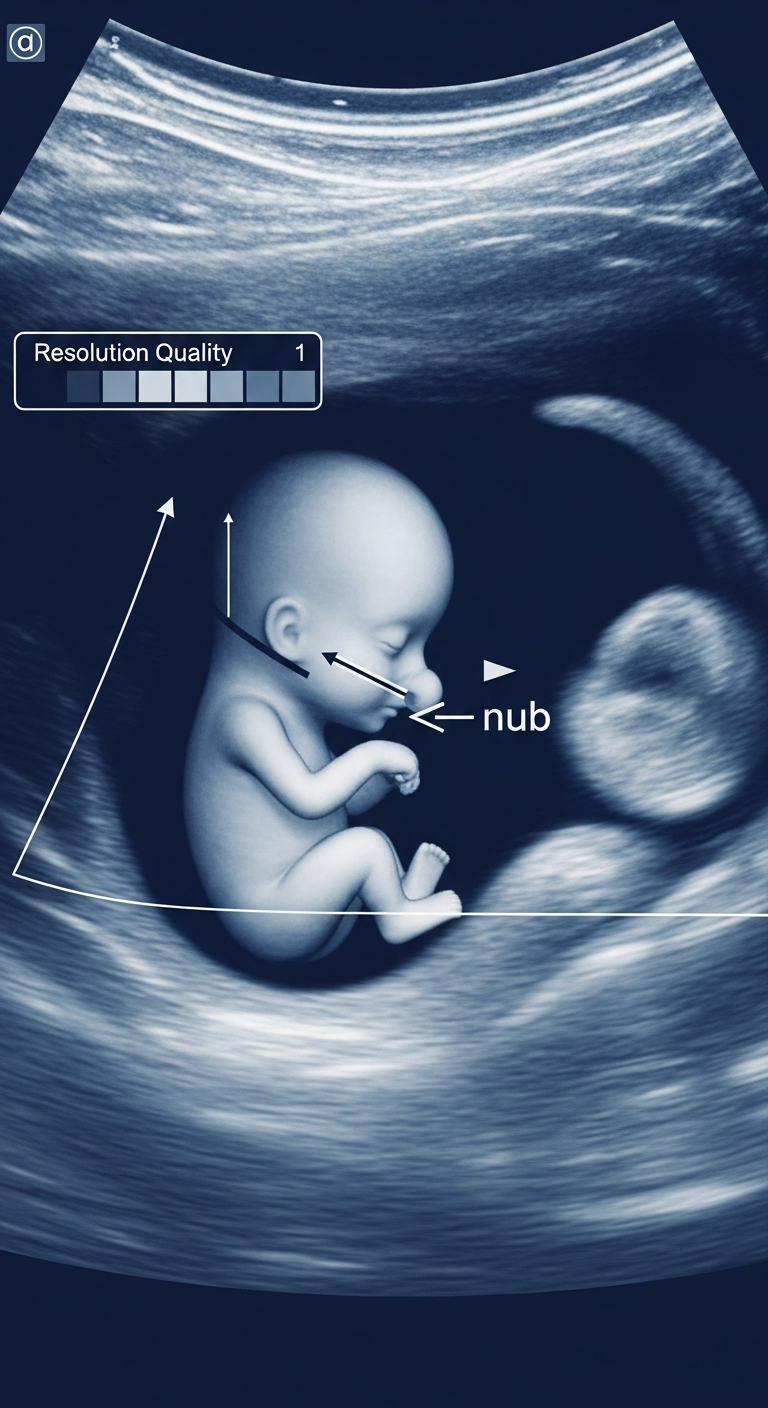
If there's one thing that separates a useful prediction from a frustrating dead end, it's ultrasound image quality. No matter how sophisticated the AI behind a nub theory app might be, it can only work with what it's given — and a blurry, poorly angled, or badly lit scan image will undermine even the most advanced analysis.
Here's what matters most when submitting your scan to a nub theory app:
1. Gestational Age: Timing Is Everything
The single biggest factor influencing accuracy is when your scan was taken. The optimal window for nub theory analysis is between 11 and 14 weeks of pregnancy. During this period:
- The genital tubercle (the "nub") is visible and distinct enough to measure
- The angle is meaningful — it hasn't yet fully differentiated into clearly male or female anatomy
- There's enough fetal development to produce a reliable reading
If your scan was taken before 11 weeks, the nub may simply be too small to analyze confidently. If you're curious about what the analysis looks like at a specific stage, our step-by-step guide to nub theory at 13 weeks walks through what to expect at one of the most popular scan windows.
2. Fetal Position and Angle
For the nub to be measurable, the baby needs to be in a true sagittal (side profile) position — lying sideways with the spine clearly visible. If your baby was facing forward, curled up, or turned away from the probe during the scan, the nub angle simply cannot be assessed accurately, regardless of the app being used.
A good nub theory image will typically show:
- A clear profile view of the baby's head, spine, and lower body
- The spine running horizontally across the image
- The nub visible at the base of the spine, pointing either upward (≥30° — often associated with male) or running parallel (≤30° — often associated with female)
3. Image Clarity and Resolution
High-resolution images produce better AI analysis. Whenever possible:
- Use the digital copy of your scan rather than a photo of a printed image
- Avoid images with heavy shadows, glare, or watermarks obscuring the key area
- Crop or frame the image so the fetal profile is centred and fills most of the frame
Not sure what a well-positioned nub actually looks like? Browsing real nub theory examples from actual ultrasounds can help you calibrate your eye before submitting your own image — and give you a much clearer sense of what the AI is looking for.
4. The AI Model Behind the App
Not all nub theory apps are created equal. The quality of the underlying AI model — how many scans it was trained on, whether it accounts for gestational age, and how it handles ambiguous images — varies significantly between tools. A well-trained model will flag low-confidence results rather than forcing a prediction from an unclear image, which is exactly what you want from a responsible app.
The bottom line: Give the app the best possible image at the right gestational stage, and you give yourself the best possible chance of a meaningful, accurate prediction.
How Long Does It Take to Get Results From a Nub Theory App?
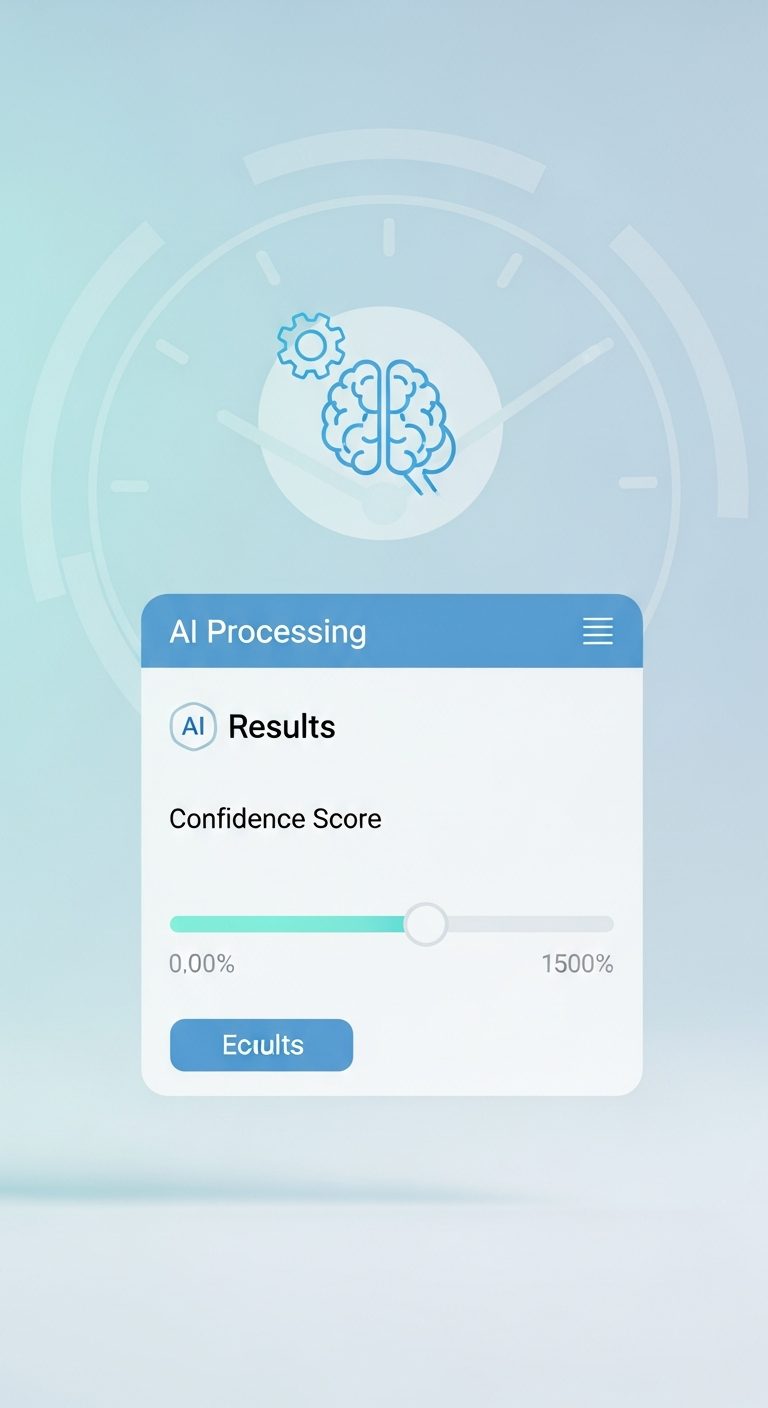
One of the most appealing things about using a nub theory app is the speed. Unlike waiting weeks for your anatomy scan or days for specialist referrals, AI-powered analysis delivers results in a fraction of the time — often in under two minutes from the moment you upload your scan.
Here's a general breakdown of what the process typically looks like:
- Upload your ultrasound image – This usually takes 10–30 seconds depending on your connection speed and file size
- AI processing and angle analysis – The model examines the nub's position, measures its angle relative to the spine, and cross-references gestational markers. This typically takes 30–90 seconds
- Results delivered – You'll receive a prediction along with a confidence score that reflects how clearly the nub was visible and how definitively the angle could be measured
Total time from upload to result: typically 1–3 minutes.
That said, there are a few factors that can influence how quickly — and how cleanly — your results come through:
Image Upload Speed
Larger, higher-resolution image files take slightly longer to upload and process. If you're on a slower mobile connection, compressing your image beforehand (without sacrificing key detail) can help speed things along.
Confidence Thresholds and Ambiguous Images
A well-designed nub theory app won't just rush to a conclusion if the image is unclear. If the AI detects that the nub angle is borderline, the baby's position is suboptimal, or the image quality is too low for a reliable reading, it will flag the result as low confidence rather than return a misleading prediction. In some cases, you may be prompted to re-upload a clearer image.
This is actually a good sign — it means the app is being honest about its limitations rather than guessing blindly.
When Results Feel Inconclusive
If your first submission returns a low-confidence or ambiguous result, don't be discouraged. It may simply mean your baby wasn't in the ideal position during that particular scan. Many parents find it helpful to revisit the question at their next scheduled appointment — particularly if they're trying to identify the nub on their 12-week scan and want to ensure they're submitting the most informative frame.
For parents who want to go beyond a single prediction method, it's also worth knowing that some apps and resources allow you to combine approaches. Our comparison of nub theory vs skull theory explores how using both methods together can sometimes add an extra layer of confidence to your early gender prediction.
The bottom line: In most cases, you'll have your nub theory result in just a few minutes — making it one of the fastest, most accessible ways to explore early gender prediction from the comfort of your home.
Your Nub Theory App Journey: Final Thoughts and Next Steps

By now, you have a much clearer picture of what a nub theory app can — and can't — do for you during those exciting, impatient weeks of early pregnancy. Let's bring it all together.
The key takeaways from this FAQ are simple but worth keeping front of mind:
- Timing matters. The 11–14 week window is your sweet spot for the most reliable nub angle analysis.
- Image quality is everything. A clear, sagittal-profile scan gives the AI the best possible foundation for a confident prediction.
- Results are fast — typically under three minutes — but a low-confidence flag is a feature, not a flaw. It means the app is working honestly.
- AI-powered predictions are not medical diagnoses. Use your results to fuel excitement and conversation, not as a substitute for professional care.
If you're still figuring out how to locate the nub in your scan or you want to understand what a well-positioned image actually looks like, our complete guide to reading nub theory examples is an excellent next step — it walks through real ultrasound cases so you know exactly what the AI is evaluating.
And if you're curious whether there are other no-cost ways to explore early gender prediction, it's worth browsing the best free nub theory predictor options to understand what's available and how different tools compare.
Above all, remember that whatever a nub theory app tells you — boy, girl, or inconclusive — the real joy is in the journey. Use these tools as a fun, informed companion on your pregnancy adventure, and let your healthcare provider handle the rest.
Happy scanning, and congratulations on your pregnancy! 🎉
Frequently Asked Questions
What is a nub theory app and how does it work?
A nub theory app uses AI-powered image recognition to analyze your first or second-trimester ultrasound scan and predict your baby's sex based on the angle of the genital tubercle — commonly known as the 'nub.' The app compares the nub's angle relative to the spine to determine whether it points upward (typically indicating male) or runs parallel (typically indicating female).
How accurate is nub theory for predicting baby gender?
When performed by an experienced analyst or a well-trained AI model, nub theory can achieve accuracy rates of 70–97% depending on the quality of the ultrasound image and the gestational age. Results are most reliable between 11 and 14 weeks of pregnancy, when the nub is visible but gender has not yet fully developed anatomically.
When is the best time to use a nub theory app?
The optimal window for using a nub theory app is between 11 weeks and 14 weeks of pregnancy. Before 11 weeks, the nub may not be visible or distinct enough for accurate analysis. After 14 weeks, the genitalia begin to differentiate more clearly, making traditional ultrasound identification more straightforward and nub theory less necessary.
Is a nub theory app a substitute for medical advice?
No. A nub theory app — including AI-powered tools like NubScan — is intended for informational and entertainment purposes only. It is not a substitute for professional medical advice, diagnosis, or treatment. For confirmed fetal sex determination or any pregnancy-related medical concerns, always consult a qualified healthcare provider or licensed sonographer.