

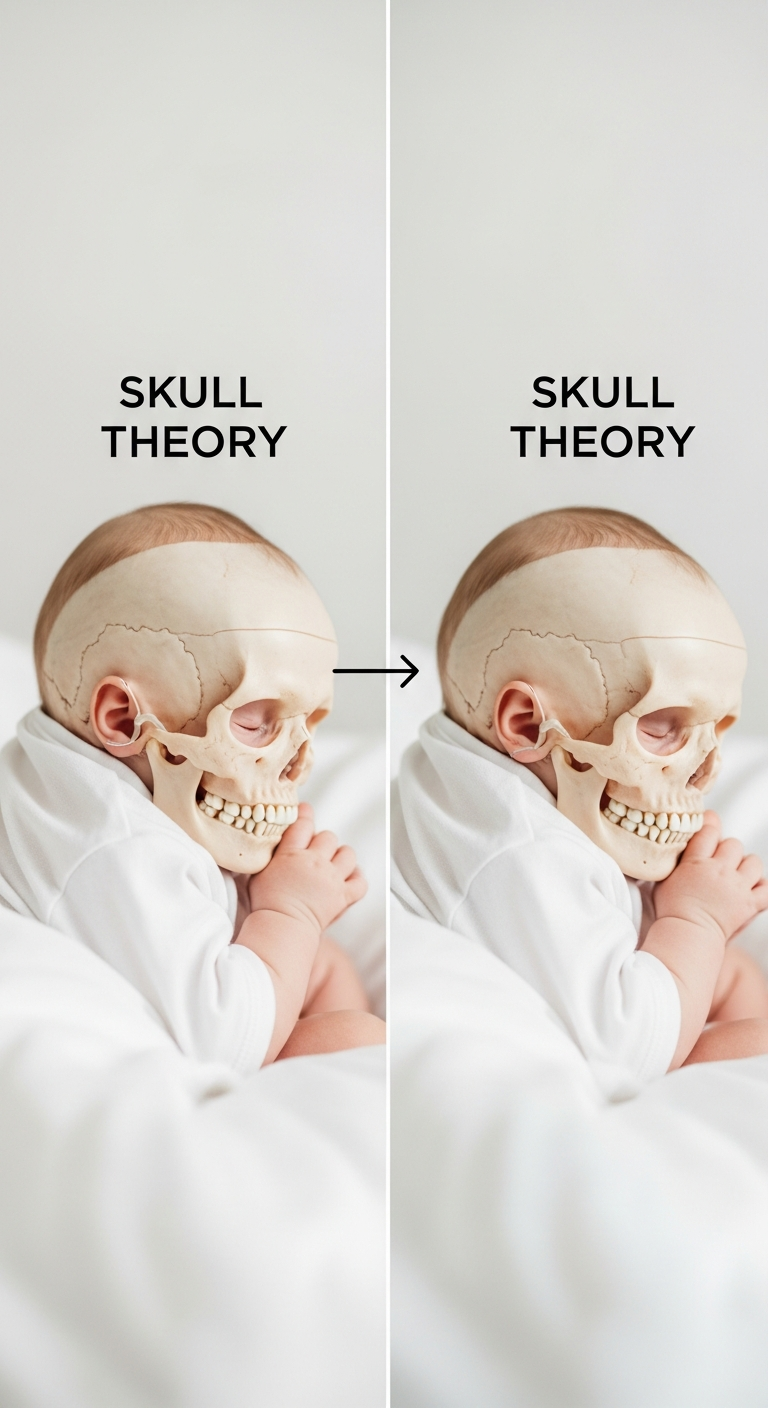
Curious about predicting your baby's sex before the anatomy scan? Nub theory and skull theory are two popular ultrasound-based methods, but they work very differently. We break down the science, accuracy rates, and ideal timing for each so you can make an informed choice.
Nub Theory vs Skull Theory: Two Popular Ways to Predict Baby's Sex Early
The wait between your first ultrasound and the anatomy scan can feel like an eternity — especially when you're eager to know whether you're expecting a boy or a girl. That's exactly why so many parents-to-be turn to popular prediction methods like nub theory and skull theory. But when it comes to nub theory vs skull theory, which one should you actually trust?
Both methods use clues visible in ultrasound images to make an educated guess about your baby's sex — often weeks before a medical professional will confirm it. However, they work in completely different ways, rely on different anatomical markers, and come with very different levels of scientific backing.
- Nub theory focuses on the angle of the genital tubercle — a tiny nub visible between your baby's legs during the first trimester
- Skull theory examines the overall shape, size, and bony structure of your baby's skull to infer gender
On the surface, both sound intriguing. But dig a little deeper and you'll find that these two methods are far from equal in terms of accuracy, reliability, and ease of use.
In this comparison, we'll break down exactly how each method works, when to use them, what the science says, and — most importantly — which one gives you the best shot at a correct early prediction. Whether you're 11 weeks along clutching your first scan photo or searching for answers mid-pregnancy, this guide will help you make sense of it all.
Nub Theory vs Skull Theory: Feature-by-Feature Comparison
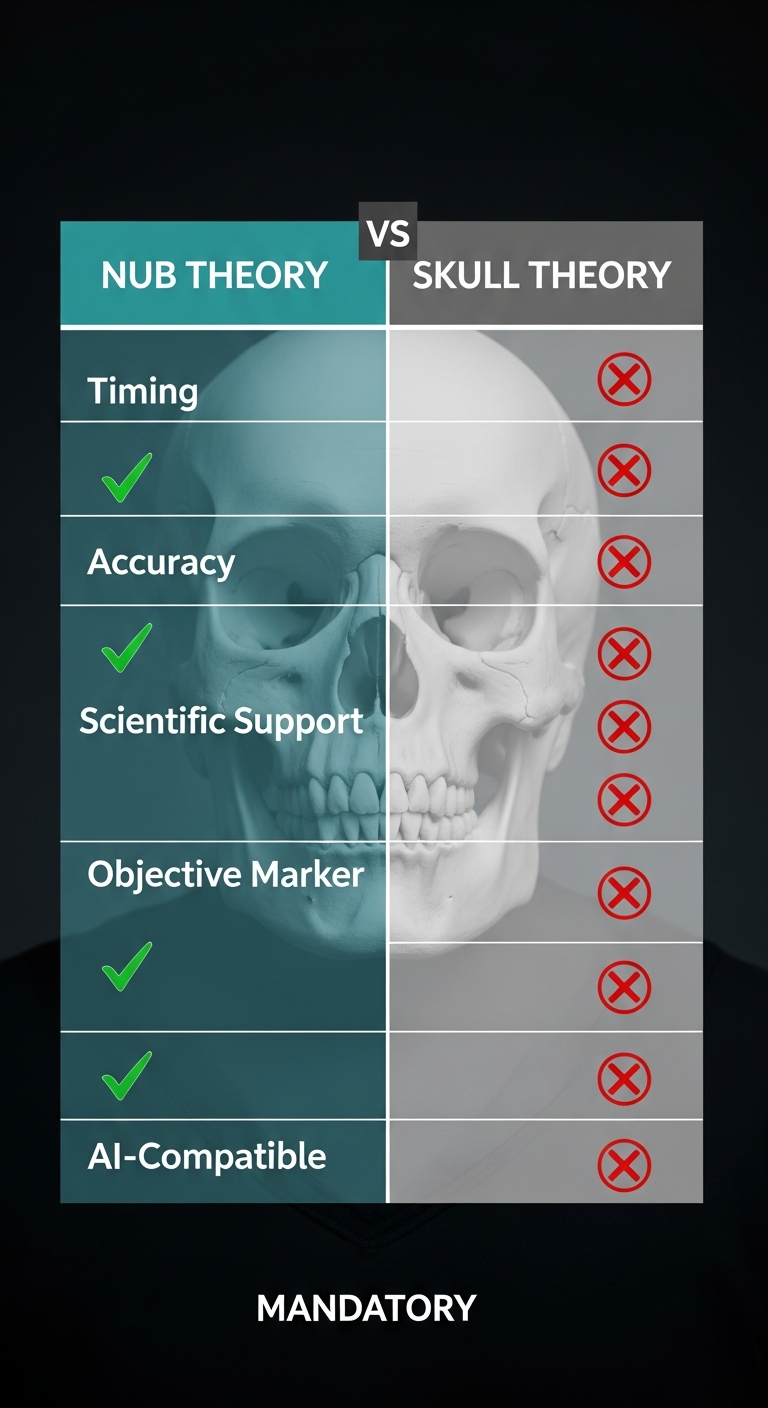
To truly understand how nub theory vs skull theory stacks up, it helps to compare them across the key factors that matter most to expecting parents: timing, accuracy, scientific backing, and ease of use. Here's how the two methods measure up side by side.
---
⏱ Timing & Gestational Window
- Nub theory has a very specific sweet spot — 11 to 14 weeks of pregnancy. During this window, the genital tubercle (the "nub") is visible on ultrasound but hasn't yet differentiated into clearly male or female anatomy. Earlier than 11 weeks and the nub is too small to assess; later than 14 weeks and the anatomy is typically obvious without needing theory at all.
- Skull theory is more flexible in timing — some claim it can be applied from the first trimester through the third, though its proponents most commonly apply it to 12-week scans and beyond.
Winner: Skull theory for timing flexibility — but that flexibility comes at a cost (see accuracy below).
---
🎯 Accuracy
This is where the two methods diverge most dramatically.
- Nub theory, when assessed by a trained specialist at the right gestational age, has reported accuracy rates of up to 97% in peer-reviewed studies. Even for non-specialists, a well-angled scan image can yield strong results — especially with AI-powered tools that remove human bias from the equation.
- Skull theory has no robust scientific validation. Its accuracy is largely anecdotal, relying on subjective visual assessments of skull shape (e.g., "rounder = girl, more angular = boy"). Studies have not demonstrated consistent results that exceed chance levels.
If you want to understand what a reliable nub theory result looks like in practice, the angle of the genital tubercle is a measurable, objective data point — something skull shape simply cannot offer.
Winner: Nub theory — by a significant margin.
---
🔬 Scientific Backing
| Feature | Nub Theory | Skull Theory |
|---|---|---|
| Peer-reviewed studies | ✅ Yes | ❌ Limited/none |
| Objective anatomical marker | ✅ Yes (nub angle) | ❌ No (subjective shape) |
| Used by medical professionals | ✅ Sometimes | ❌ Rarely |
| Reproducible results | ✅ Generally yes | ❌ Inconsistent |
Winner: Nub theory
---
🖼 Ease of Use at Home
- Nub theory requires a scan image taken at a specific angle (the sagittal plane, where baby is seen in profile). Not all 12-week scan photos capture this view clearly, which can limit usability. However, when the image quality is good, AI tools can interpret the nub angle quickly and reliably. If you're curious about the optimal window, our step-by-step guide to nub theory at 13 weeks walks through exactly what to look for.
- Skull theory can technically be attempted with almost any scan photo showing the baby's head, making it seem more accessible. But "accessible" doesn't mean accurate — you're essentially guessing based on a subjective impression of head shape.
Winner: Nub theory for meaningful results; skull theory for sheer flexibility of image requirements.
---
📊 Quick Comparison Summary
| Factor | Nub Theory | Skull Theory |
|---|---|---|
| Best timing | 11–14 weeks | Flexible (12+ weeks) |
| Accuracy | Up to 97% | Unvalidated / anecdotal |
| Scientific support | Strong | Weak |
| Objective marker | Yes | No |
| AI-compatible | ✅ Yes | ❌ Not reliably |
| Ease of DIY use | Moderate | Easy (but unreliable) |
The picture becomes clear: while skull theory might feel like an easier DIY option, nub theory offers a far more grounded, measurable, and reliable approach to early gender prediction — especially when paired with modern AI analysis.
Nub Theory vs Skull Theory: Honest Pros & Cons of Each Method
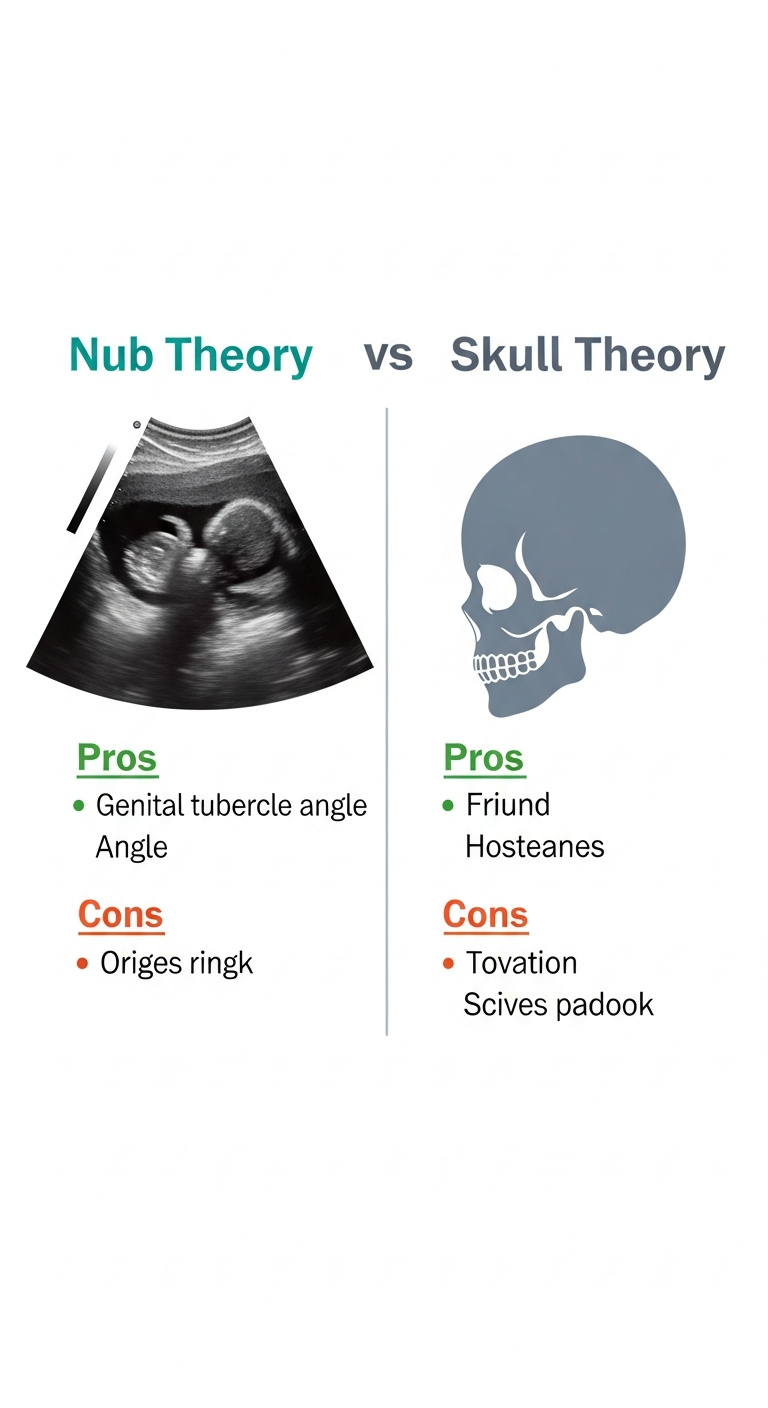
Now that we've compared the two methods feature by feature, let's zoom in on the real-world advantages and limitations of each. Understanding the pros and cons of nub theory vs skull theory can help you decide which approach — or combination — makes the most sense for your pregnancy journey.
---
✅ Nub Theory: Pros
- Scientifically grounded — The genital tubercle angle is a real, measurable anatomical marker used in clinical research. This isn't guesswork; there's genuine biological reasoning behind it.
- High accuracy potential — When conditions are right (correct gestational age, good scan angle, skilled analysis), accuracy can reach up to 97%. That's remarkably strong for an early prediction method.
- Objective and consistent — Because the nub angle can be measured rather than just visually "felt," results are more reproducible across different people analyzing the same image.
- AI-compatible — The structured nature of nub theory means it translates well to AI-powered analysis. Apps like NubScan can analyze your ultrasound photo in seconds and deliver a prediction with a confidence score — removing personal bias entirely.
- Early answers — You can use it as early as 11 weeks, potentially weeks before any other reliable prediction method is available.
---
❌ Nub Theory: Cons
- Narrow timing window — It only works well between 11 and 14 weeks. Miss that window and the anatomy becomes obvious on its own — or the nub is too small to assess confidently.
- Scan angle dependency — The method requires a clear sagittal plane image (baby viewed from the side). Not all scan photos offer this angle, which can make analysis impossible regardless of how good the tool is.
- Steep learning curve for DIY — Identifying and correctly measuring the nub angle takes practice. Without an AI tool or experienced eye, it's easy to misread the image — especially for first-timers.
---
✅ Skull Theory: Pros
- Flexible timing — Skull theory can be attempted on scans from the first trimester all the way through the third, making it appealing when you've missed the ideal nub theory window.
- Works with almost any head-on or profile scan — Since it only requires a view of the baby's skull, it's less dependent on a specific scan angle.
- Simple and accessible — Anyone can attempt skull theory with a basic understanding of the "rules" (rounder skull = girl, more prominent brow ridge = boy). No specialist knowledge required.
- Can be fun as a complementary method — Many parents enjoy using it alongside other prediction tools just for the excitement of it, without placing too much weight on the result.
---
❌ Skull Theory: Cons
- Lacks scientific validation — There are no peer-reviewed studies confirming that skull shape reliably predicts fetal sex. Its accuracy claims are largely anecdotal and community-driven.
- Highly subjective — Without an objective measurement, two people looking at the same scan can reach completely opposite conclusions. What looks "rounded" to one person may look "angular" to another.
- Easily influenced by scan quality — Shadows, angles, and image resolution can all distort the apparent shape of the skull, leading to inconsistent readings.
- No AI tool can reliably automate it — Because the method lacks a well-defined anatomical rule set, it's not something that can be systematically analyzed by machine learning in the way nub theory can.
- Risks of confirmation bias — Parents who already have a gut feeling about their baby's sex may unconsciously interpret skull shape in a way that confirms what they already believe.
---
🏆 The Balanced Takeaway
If you're weighing nub theory vs skull theory purely on merit, nub theory wins on every objective measure: science, accuracy, consistency, and technological compatibility. Skull theory, while fun and accessible, is better treated as a lighthearted guessing game than a reliable prediction method.
That said, the best approach for curious parents is often to lead with nub theory during the 11–14 week window — ideally supported by an AI tool for an unbiased read — and use skull theory as a supplementary, low-stakes activity if you have scans from later in pregnancy. If you want to sharpen your eye before diving in, exploring real nub theory examples is a great way to understand what a strong prediction actually looks like.
Final Verdict: Which Method Should You Actually Use?
After comparing nub theory vs skull theory across timing, accuracy, scientific backing, ease of use, pros, and cons, the verdict is clear — but that doesn't mean there's nothing valuable left to take from this comparison.
🏅 Nub Theory Wins — Here's Why
If your goal is the most reliable, scientifically supported early gender prediction available before your anatomy scan, nub theory is the clear winner. It's not even particularly close:
- It's backed by peer-reviewed clinical research
- It uses a measurable, objective anatomical marker — not subjective impressions
- Its accuracy can reach up to 97% when conditions are right
- It's compatible with AI-powered analysis, meaning you can get a fast, unbiased result from a photo of your own scan
- It gives you answers as early as 11 weeks — weeks before any other non-invasive method
Skull theory, by contrast, lacks scientific validation, relies on subjective visual assessment, and cannot be reliably automated or standardized. While it's completely harmless to try for fun, it shouldn't be your primary method if you're genuinely hoping for an accurate prediction.
📅 When to Use Each Method
| Situation | Best Method |
|---|---|
| You have a scan at 11–14 weeks | Nub theory |
| You missed the nub theory window | Skull theory (for fun only) |
| You want the most accurate early prediction | Nub theory + AI analysis |
| You just want a lighthearted guess | Either — no pressure |
🤖 Make It Even Easier With AI
The biggest leap forward in nub theory prediction isn't in the science itself — it's in how accessible that science has become. AI-powered tools like NubScan allow any parent-to-be to upload their ultrasound photo and receive an instant nub theory analysis with a confidence score, without needing a trained specialist or medical background.
This matters because one of nub theory's historically limiting factors was the learning curve. Correctly identifying and measuring the genital tubercle angle takes practice — but AI removes that barrier entirely. You get the benefit of a structured, scientifically grounded method without needing to become an expert yourself.
If you want to better understand what the app is actually looking for before you upload, our step-by-step guide to nub theory at 13 weeks walks through the exact criteria used to assess a scan — so you can feel confident in your result.
🎯 Our Recommendation
Use nub theory as your primary method during the 11–14 week window, and pair it with an AI tool for the most accurate, bias-free result. Skull theory can be a fun supplementary activity — a light-hearted way to keep the guessing game going if you have later scan images — but treat it as entertainment rather than evidence.
At the end of the day, the only truly definitive answer comes from your anatomy scan or a medical test. But if you're looking for the best educated guess the science can offer early in pregnancy, nub theory — especially AI-assisted — is the method to trust.
Frequently Asked Questions
What is the difference between nub theory and skull theory?
Nub theory predicts baby's sex by analyzing the angle of the genital tubercle (nub) visible on ultrasound, ideally between 11–14 weeks. Skull theory looks at the shape and structure of the baby's skull to guess gender, and can sometimes be applied to scans after the first trimester.
Which is more accurate — nub theory or skull theory?
Nub theory tends to have higher reported accuracy (up to 97% in some studies when performed by trained experts at the right gestational age) compared to skull theory, which is considered more subjective and less scientifically validated.
When can nub theory be used on an ultrasound?
Nub theory works best between 11 and 14 weeks of pregnancy, when the genital tubercle is visible but not yet fully differentiated into male or female anatomy.
Can I use an app to analyze nub theory from my ultrasound photo?
Yes! Apps like NubScan use AI-powered image recognition to analyze your ultrasound photo and provide a nub theory-based gender prediction with a confidence score — all from your phone in seconds.
Is skull theory scientifically proven?
Skull theory is not strongly supported by peer-reviewed science and is largely considered a folk method. It relies on subjective visual assessments of skull shape, making it less reliable than nub theory for early gender prediction.