


Curious about your baby's gender at 13 weeks? Nub theory offers a fascinating way to get early clues from your ultrasound scan. Follow our step-by-step guide to understand how it works and how AI can make the process faster and more accurate.
What Is Nub Theory at 13 Weeks — and Why Does It Matter?
You've just had your 12–13 week ultrasound, and you're staring at a grainy black-and-white image wondering: could this actually tell me my baby's gender already? The answer might surprise you — and it all comes down to something called nub theory.
Nub theory at 13 weeks is one of the earliest methods parents and enthusiasts use to predict a baby's sex before the official anatomy scan at 18–20 weeks. While it's not a medical diagnosis, it's a genuinely fascinating technique backed by real anatomical science — and with the help of modern AI tools, it's more accessible than ever.
So, what is nub theory?
In early pregnancy, all babies develop a small tissue protrusion between their legs called the genital tubercle — or simply, the "nub." Before around 14 weeks, this nub hasn't yet fully developed into clearly male or female genitalia. However, the angle of the nub relative to the baby's spine can offer early clues:
- A nub angled upward at 30° or more relative to the spine is typically associated with a boy
- A nub that runs parallel or at less than 30° to the spine is often associated with a girl
Why 13 weeks is the sweet spot
13 weeks is widely regarded as the ideal time to attempt nub theory for a few key reasons:
- The nub is large enough to be visible on a standard ultrasound
- The angle is more defined compared to earlier scans at 11–12 weeks
- The baby is still in the early enough stage that the nub hasn't fully differentiated — meaning the angle is the primary distinguishing clue
Get any earlier, and the nub may be too small to read clearly. Wait until 14+ weeks, and the genitalia may already be developing further, changing what you see.
What you'll learn in this guide
In this step-by-step guide, we'll walk you through exactly how to read nub theory at 13 weeks — from understanding your ultrasound image, to identifying the nub, to measuring the angle correctly. We'll also show you how AI-powered tools like NubScan can take the guesswork out of the process entirely.
⚠️ Important: Nub theory is for informational and entertainment purposes only. Always consult your healthcare provider for confirmed gender determination.
Step 1: Gather and Prepare Your Ultrasound Image
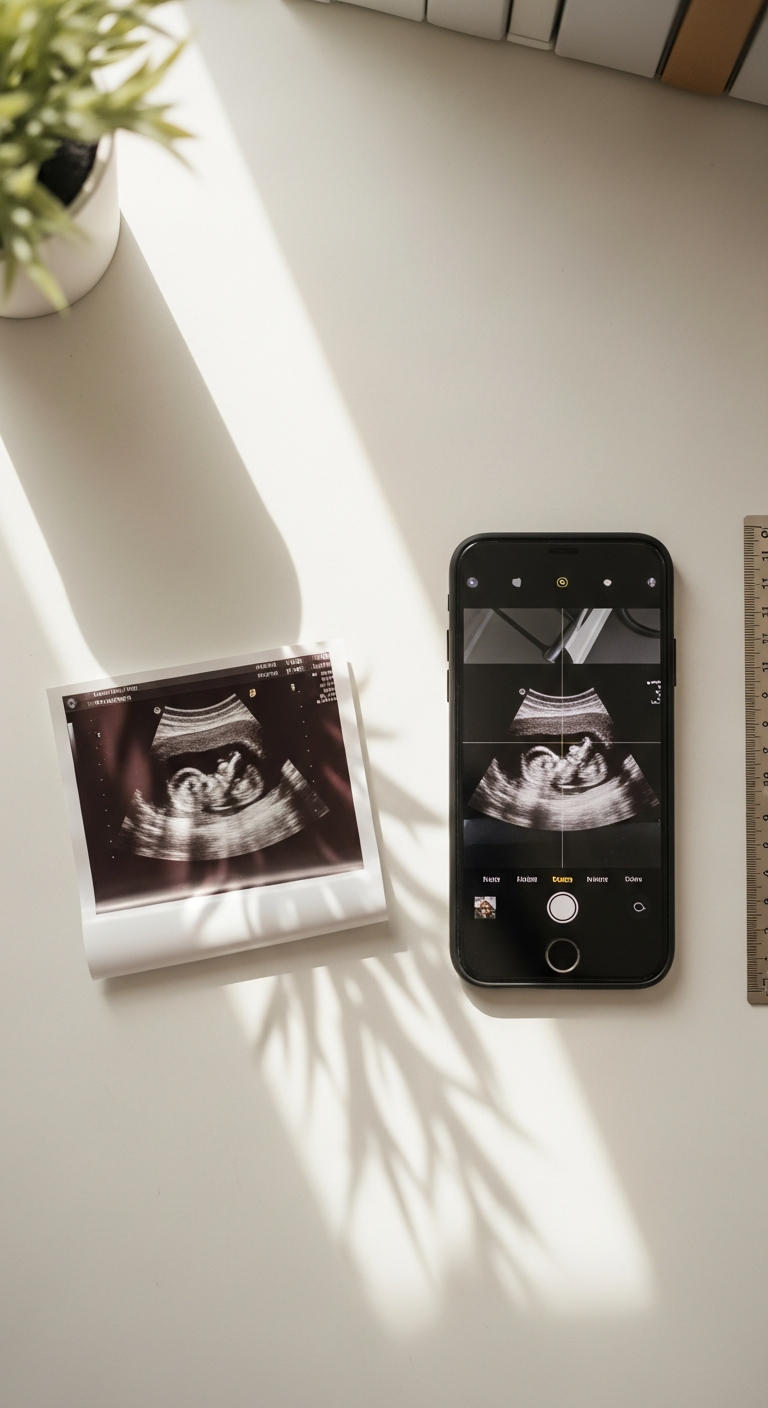
Before you can apply nub theory at 13 weeks, you need the right raw material: a clear, well-positioned ultrasound image. This preparation step is arguably the most important in the entire process — because even the most expert analysis can't overcome a blurry or poorly angled scan.
What you'll need before you start
Here's a simple checklist to get everything in place:
- Your 12–13 week ultrasound scan — either a printed photo or a digital file
- Good lighting if photographing a printed scan with your phone
- A smartphone or computer to upload or work with the image digitally
- A ruler or angle-measuring tool (optional, if analysing manually)
- A magnifying tool or zoom function to examine the nub region more closely
Choosing the right scan image
Not all ultrasound photos are created equal. For nub theory to work reliably, your image needs to meet a few specific criteria:
- Profile (sagittal) view — The baby must be photographed side-on, so you can see a clear profile from head to spine to pelvis. This is non-negotiable for measuring the nub angle.
- Spine clearly visible — Since the nub angle is measured relative to the spine, the spine needs to be clearly defined in the image
- Nub visible between the legs — Look for the small protrusion at the base of the spine. If the baby's legs are crossed or the pelvis is turned away, the nub may be obscured
- Sufficient image sharpness — A blurry or overexposed image will make accurate measurement nearly impossible
💡 Pro tip: If you received multiple frames from your scan session, compare them all. Sometimes one image is significantly clearer than the others — and that's the one you want to work with.
What if my scan image isn't ideal?
This is more common than you'd think. Babies at 13 weeks are wiggly little things, and capturing a perfect profile shot isn't always guaranteed. If your image is unclear:
- Ask your sonographer if additional images were captured during your session — clinics sometimes have extras on file
- Request a rescan if your healthcare provider offers follow-up appointments
- Try AI-assisted analysis — tools like NubScan are designed to work with a range of image qualities and can often extract meaningful results even from imperfect scans
Digitising your printed scan
If you only have a printed paper copy of your ultrasound, you'll need to digitise it before using any app or online tool. Here's how to get the best result:
Once your image is prepared and ready, you're set up for success. If you're curious about how AI tools process these images once uploaded, our blog features deeper dives into the technology behind modern nub theory analysis — well worth a read before your next step.
Step 2: Identify and Measure the Nub Angle

With a clean, well-prepared ultrasound image in hand, it's time for the most critical part of the process: actually identifying the nub and measuring its angle. This is where nub theory at 13 weeks transforms from abstract concept into a real, actionable prediction — and where precision makes all the difference.
Locating the nub on your ultrasound
If you've never done this before, the nub can be tricky to spot at first. Here's a simple, step-by-step approach to finding it:
💡 Visual tip: The nub often looks like a tiny pointed bud or a short line extending from the pelvic region. It's subtle, so zoom in as much as your tool allows without losing clarity.
Measuring the nub angle — the core of nub theory
Once you've identified the nub, the next step is measuring its angle relative to the spine. This is the defining measurement in nub theory at 13 weeks:
- Draw a reference line along the baby's spine (or the flat base of the lower back)
- Draw a second line along the nub itself, from its base to its tip
- Measure the angle between these two lines
Here's how to interpret what you find:
| Nub Angle | Likely Gender Prediction |
|---|---|
| 30° or above (pointing upward) | Boy |
| Under 30° (parallel or flat) | Girl |
| Ambiguous / unclear | Inconclusive — rescan recommended |
Common mistakes to avoid
Even experienced enthusiasts make errors when applying nub theory at 13 weeks manually. Watch out for these pitfalls:
- Confusing the nub with the umbilical cord — the cord typically appears as a rounder, loop-like structure, not a defined pointed protrusion
- Measuring from the wrong reference point — always measure relative to the spine, not the baby's overall body angle
- Working with a non-profile image — if the baby isn't perfectly side-on, any angle measurement will be distorted and unreliable
- Estimating rather than measuring — eyeballing the angle introduces significant error; use a protractor tool or a digital angle measurement app
When to consider using AI assistance
Manual nub angle measurement is entirely doable, but it requires a good eye, the right tools, and a clear image. For many parents, the process can feel frustrating — especially when the image isn't perfect or the nub is barely visible.
This is exactly where AI-powered analysis shines. Rather than spending time squinting at millimetre-level details, you can simply upload your scan to NubScan and receive a confidence-scored result in seconds. The AI applies the same angular measurement principles outlined above — only with far greater consistency and speed than manual analysis allows.
Want to understand more about the science and technology behind these tools before diving in? Visit our about page to learn more about how NubScan was built and the principles guiding its analysis engine.
⚠️ Reminder: Whether you're measuring manually or using an AI tool, nub theory is a fun and informative exercise — but it is not a medically confirmed gender determination. Always follow up with your healthcare provider.
Your Next Steps: Making the Most of Nub Theory at 13 Weeks

Nub theory at 13 weeks is one of the most exciting tools available to curious parents-to-be — a rare window into early pregnancy where science, anatomy, and a little bit of wonder all come together. By now, you understand how it works, what to look for in your ultrasound image, and how to measure the nub angle with confidence.
Let's recap what you've learned in this guide:
- Nub theory at 13 weeks works by measuring the angle of the genital tubercle relative to the baby's spine — upward (30°+) suggesting a boy, parallel suggesting a girl
- Image quality is everything — a clear, profile-view sagittal scan gives you the best possible foundation for an accurate reading
- Manual measurement is possible, but requires careful technique and the right tools to avoid common errors
- AI-powered analysis removes much of the guesswork, delivering fast, confidence-scored results that are accessible to everyone
What to do right now
Here's a simple action plan to take everything you've learned and put it into practice:
A note on managing expectations
Even at its best, nub theory at 13 weeks carries an accuracy rate of around 70–90% — impressive for such an early prediction, but not infallible. Image clarity, baby positioning, and the experience of the analyst all play a role in the result. Whether you get a confident prediction or an inconclusive reading, try to enjoy the process for what it is: a remarkable glimpse into your baby's earliest development.
If you're hungry to learn more about ovulation tracking, fertility insights, and the technology behind tools like NubScan, head over to our blog for a growing library of guides designed to support you at every stage of your journey to parenthood.
💛 Whatever your result, congratulations on this incredible milestone. You're 13 weeks in — and every week ahead brings you closer to meeting your little one.
Frequently Asked Questions
How accurate is nub theory at 13 weeks?
Nub theory at 13 weeks is generally considered to be around 70–90% accurate when the ultrasound image is clear and the nub angle is clearly visible. The accuracy improves significantly with better image quality and expert or AI-assisted analysis.
What exactly is the 'nub' in nub theory?
The 'nub' refers to the genital tubercle — a small protrusion visible between the baby's legs on an ultrasound. Before the genitals fully differentiate, this nub can offer clues about the baby's sex based on its angle relative to the spine.
Can I use nub theory before 13 weeks?
Nub theory can sometimes be attempted from as early as 11–12 weeks, but 13 weeks is widely considered the sweet spot for reliability, as the nub angle is more defined and easier to measure at this stage.
Can an AI app really analyze my ultrasound for nub theory?
Yes! Apps like NubScan use advanced AI image recognition to analyze your sonogram and apply nub theory principles, delivering a confidence-scored result within seconds — making expert-level analysis accessible to everyone.
Is nub theory a replacement for medical gender determination?
No. Nub theory is for informational and entertainment purposes only. For a confirmed gender determination, always consult your healthcare provider or wait for a diagnostic anatomy scan, typically done around 18–20 weeks.